Large Window and Floor-to-Ceiling Solutions

Large Window and Floor-to-Ceiling Solutions

Engineered treatment strategies for oversized glazing and floor-to-ceiling openings where scale, operation, and finish precision are critical.

Who It Is Best For

  • Penthouses and hillside homes
  • Contemporary architecture with glass walls
  • Double-height spaces
  • Projects with extra-wide sliding door spans

Style and Material Options

  • Extra-wide track and shade systems
  • Segmented motorized control zones
  • Layered drapery + shade assemblies
  • Custom stack planning for door clearance

Technical Considerations

  • Long-span deflection control
  • Bracket spacing for structural stability
  • Panel split and stack zone optimization
  • Power and control planning for grouped motor systems

Suitable Spaces

Great roomsGlass-walled loungesTall stair hallsLuxury condosCorporate lobbies

Great Rooms and Living Areas

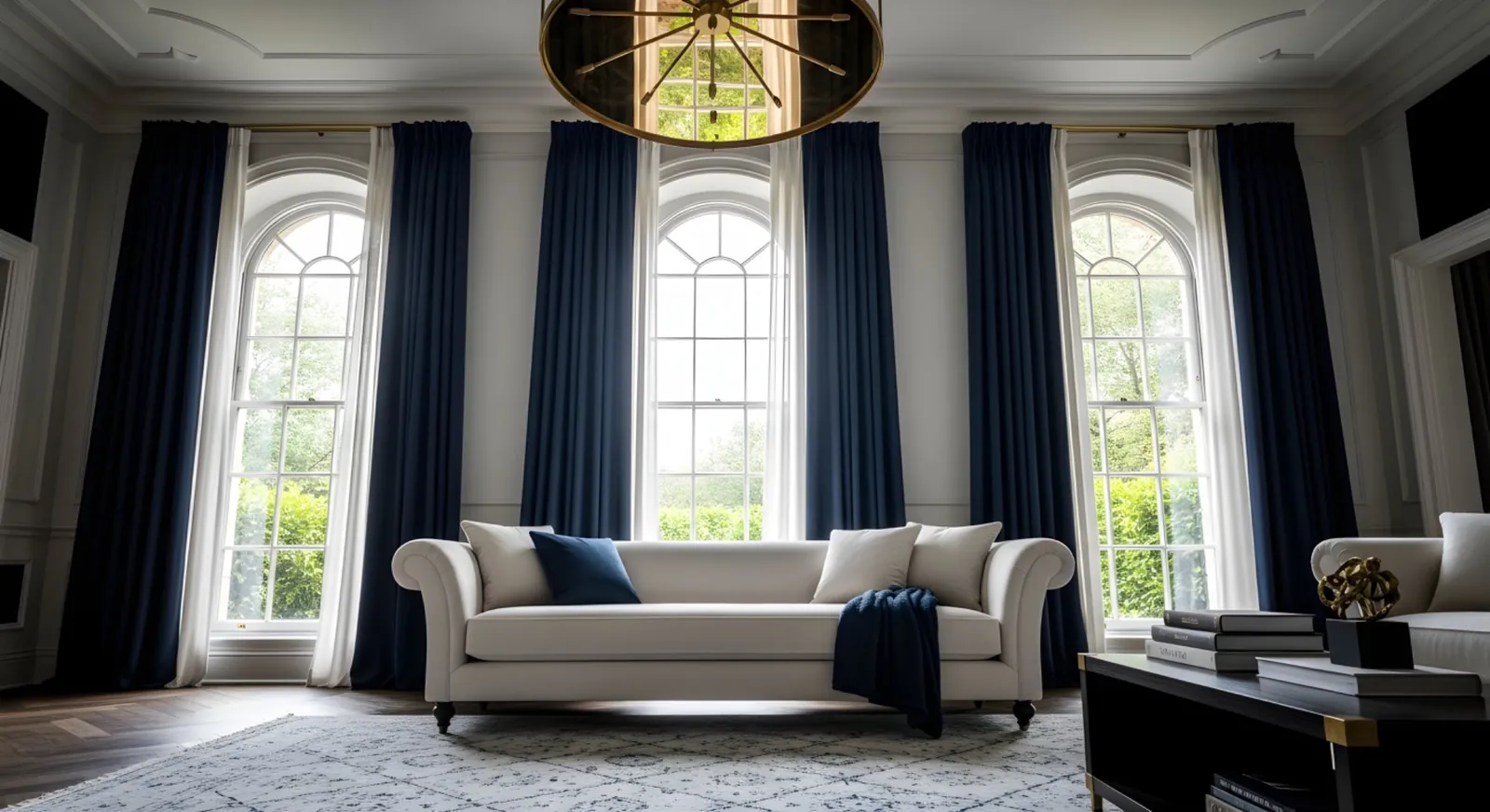
Layer sheers with privacy or blackout support to preserve scale while controlling glare across large-format glass.
Primary Suites and Guest Rooms

Use tailored blackout and thermal lining strategies for comfort, privacy, and better sleep performance.

Executive Offices and Conference Spaces

Prioritize glare reduction, privacy control, and reliable daily operation with performance-focused systems.

Material and System Education

  • Linen and linen-blends for organic drape and relaxed architectural softness.
  • Velvet, wool-blends, and interlined constructions for acoustic and thermal benefit.
  • Performance fabrics for high-use spaces requiring durability and easy-care properties.
  • Blackout, dim-out, and light-filtering linings selected by room function and exposure.

Style, Pleat, and Finish Guidance

Pleat and Header Selection

Choose ripplefold, euro pleat, French pleat, or wave fold based on architecture, desired formality, and fabric behavior.

Hardware Strategy

Decorative rods, traverse rods, and concealed tracks are selected for load, projection, and visual alignment with millwork.

Operational Control

Manual and automated systems are specified around usability, window scale, and long-term maintenance access.

Large Openings Need More Than Standard Sizing

Floor-to-ceiling glazing changes how treatments behave. Scale, mounting geometry, and daily operation all need to be engineered from the start.

Core Planning Factors

We map stack locations, split points, and access requirements so systems remain practical and visually balanced.

Why Motorization Is Common

For tall or wide openings, motorization improves usability and protects treatment longevity by reducing manual strain.

Architectural Integration

Hardware and fabric choices are selected to complement modern glass-heavy interiors rather than compete with them.

End Result

A large-window treatment package that feels deliberate, quiet, and dependable in daily use.

What Is Included

  1. 1. Design-led consultation to define functional and aesthetic goals.
  2. 2. On-site laser measurement and mounting-condition assessment.
  3. 3. Material and system specification with hardware compatibility checks.
  4. 4. Fabrication oversight and quality-control review before installation.
  5. 5. Exacting installation, calibration, and final styling adjustments.

Investment and Pricing Factors

  • Window count, dimensions, and ceiling height requirements.
  • Fabric category, lining type, and pleat/header complexity.
  • Hardware quality, finish selection, and track or rod system type.
  • Motorization scope, power method, and control integration level.
  • Installation access complexity, ladder/lift needs, and phasing.

We provide tailored pricing guidance after consultation and measurement so recommendations reflect true project scope rather than generic ranges.

Compare Options for Large Window and Floor-to-Ceiling Solutions

Primary search focus: large window treatments Los Angeles. Share your goals and we will recommend the best-fit materials, system architecture, and installation pathway.

Frequently Asked Questions

Can floor-to-ceiling windows be treated without making rooms feel heavy?

Yes. With the right material transparency and stack strategy, large-window treatments can remain light, architectural, and proportional.

Do large windows require motorization?

Not always, but motorization is frequently recommended for oversized or difficult-to-access openings.

How do you prevent long drapery runs from looking uneven?

We use precise measurement, track leveling, and panel distribution planning to maintain visual consistency across long elevations.

Helpful Guides

Plan Your Large Window and Floor-to-Ceiling Solutions Project

Our team can review your space and provide recommendations based on style, functionality, and timeline.

CallBook Consultation